Centralize operations
Teams no longer work across spreadsheets, chats, and disconnected applications.
Operational core platforms
We build internal systems that centralize workflows, connect data, and give teams one operational source of truth.
Teams no longer work across spreadsheets, chats, and disconnected applications.
Routing, status changes, and ownership run in system logic instead of through people.
Management and owners see operational states directly—not only in delayed reports.
Decisions no longer depend on one person knowing the next step.
As the business grows, disconnected tools stop being enough. Processes fragment, ownership becomes unclear, and nobody trusts the data.
Website, CRM, spreadsheets, and internal notes hold different versions of the same process.
Teams depend on someone forwarding requests and assigning tasks.
Operational truth is reconstructed after the fact instead of being visible in the system.
Configured SaaS bends the process but does not reflect the actual business logic.
Coordination, visits, workforce planning, and reporting need a structured operational system.
Orders, production steps, and supplier coordination require business-specific logic.
Requests, dispatch, and execution teams need real-time visibility.
Approvals, documents, and internal workflows need a reliable operational layer.
References
A selection of completed projects with a focus on architecture and implementation.
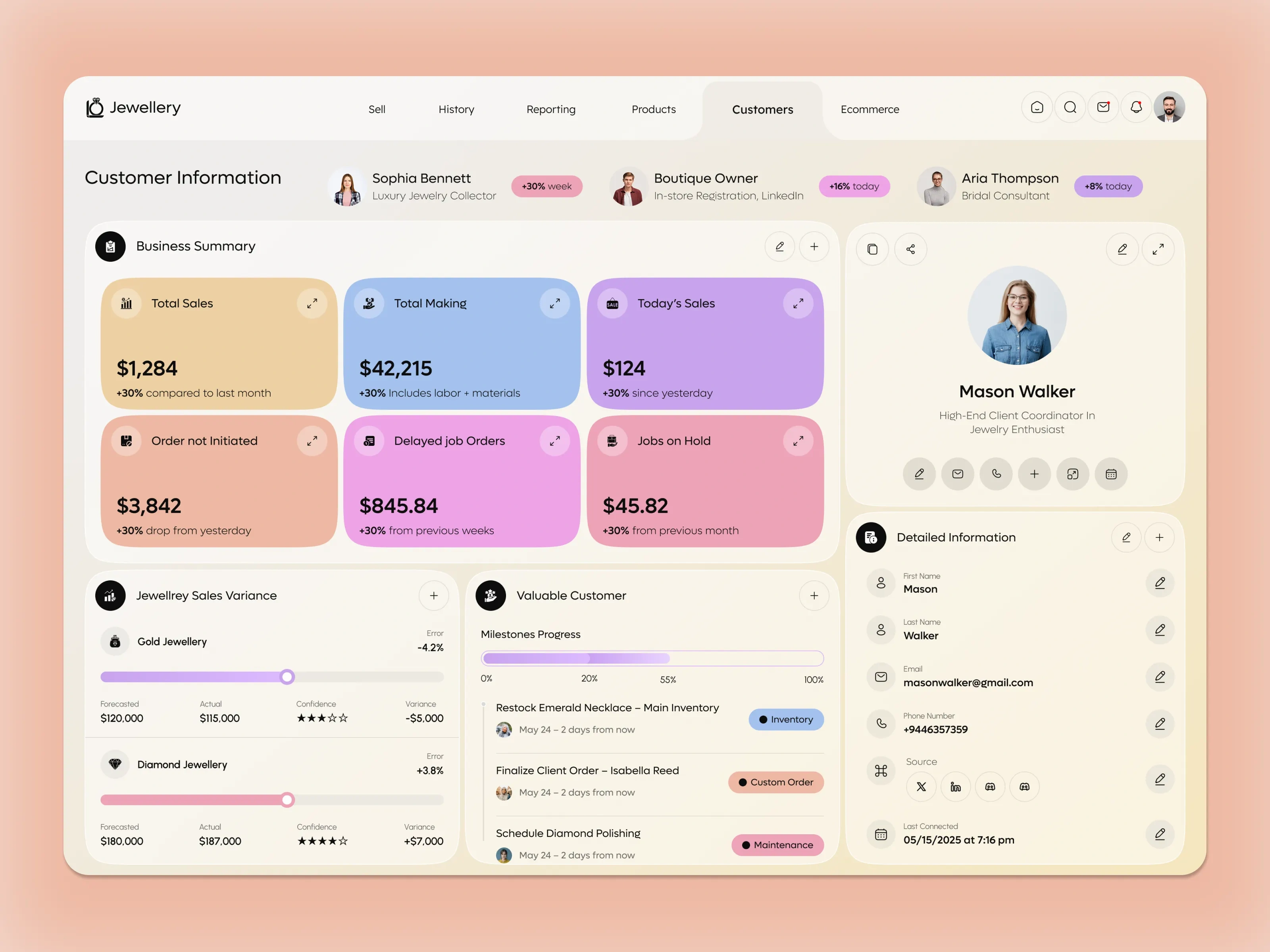
Manufacturing / Jewelry
Custom CRM · Workflow Automation · Client Portal
A single order route for jewelry production: automated assignment, CAD/estimate/invoice context, client portal and production integration.
Key capabilities
Business impact
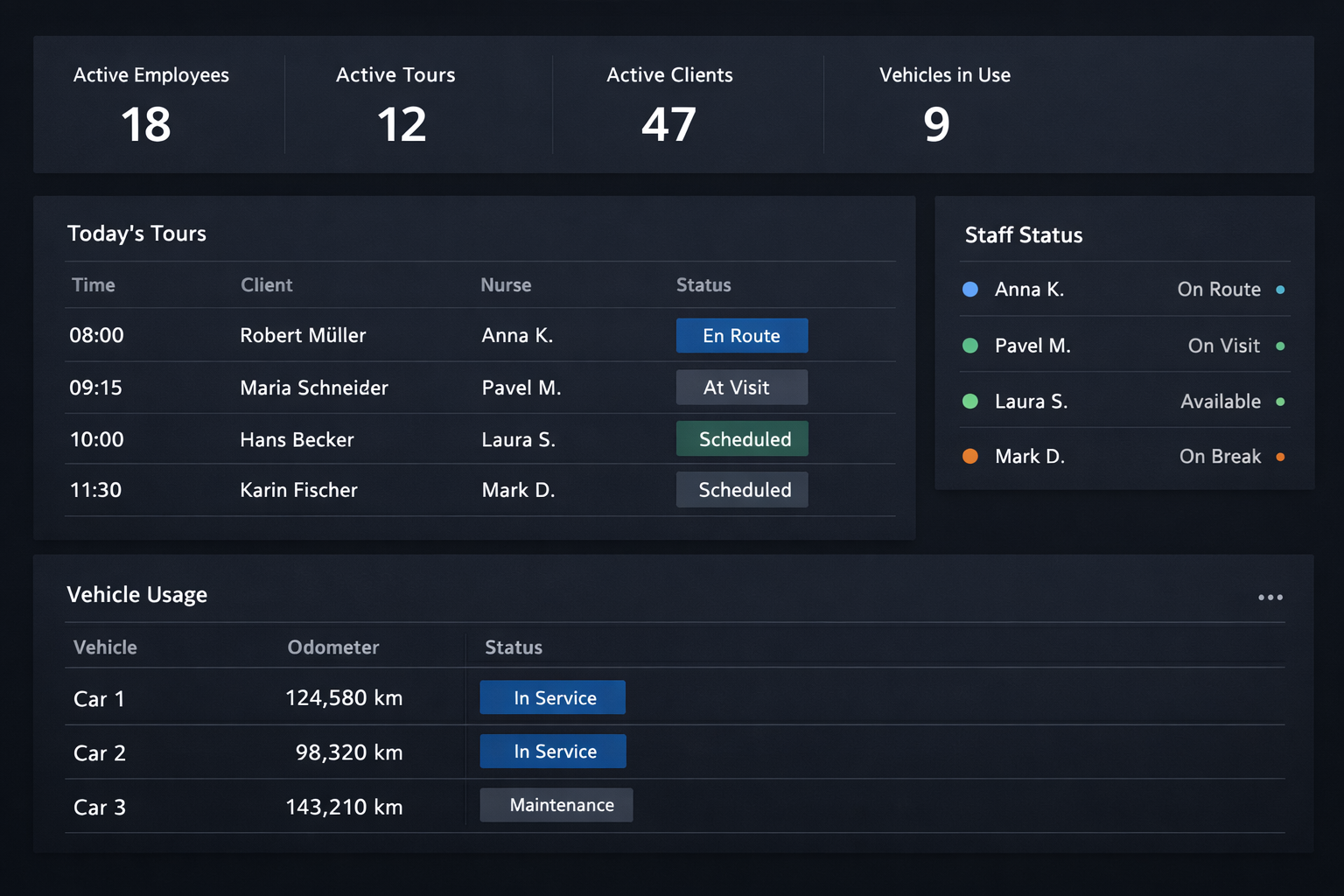
Healthcare / Ambulatory Care
Operations CRM · Tour Planning · Workforce App
A single system for daily care operations: staff, tours, time tracking, mobile task reports with client signatures, payouts, fleet and internal chat.
Key capabilities
Business impact

Hospitality / Restaurant
Online Ordering · Reservations · Admin System · Costing
One system for restaurant guest flow and daily operations: 3-language menu, Stripe orders, reservations, real-time chat, kitchen workflow, POS, staff and recipe costing.
Key capabilities
Business impact
We analyze existing tools, process gaps, and the real operational flow.
We define entities, roles, workflows, and how the system replaces current manual work.
The platform is implemented and introduced so teams can actually adopt it.
After rollout, new modules, automations, and reports can grow within the same architecture.
Frontend
React / Vue internal portals / role-based interfaces / dashboards
Backend
Laravel / Node / workflow logic / permissions / API orchestration
Infrastructure
Databases / notifications / analytics / integrations / access control
When operations are business-critical, standard tools often create workarounds instead of reflecting the real process.
Yes. We often connect new systems with forms, CRM, accounting, internal services, and legacy workflows.
No. We usually plan phased rollouts so the operational core can be introduced without disrupting the business.
Especially companies with growing operations, many handoffs, and unclear system ownership.
We can map the current process, define the operational core, and design the right architecture for the internal platform.
Request a System Audit