Validate the core loop
The first version should prove whether the main user journey creates value.
Product Validation Infrastructure
We build the first product release around a clear user flow, measurable validation logic and an architecture that can survive after launch.
The first version should prove whether the main user journey creates value.
An MVP should be light, but it should not force a rebuild after initial traction.
Launches fail when support, payments, internal tooling and data flows are ignored.
Usage signals, conversion points and friction must be visible from day one.
Most MVP projects move too fast in the wrong direction. Teams build screens before the product logic, or ship prototypes that cannot evolve.
Scope grows around ideas, not around the single user flow that needs validation.
The release looks launch-ready, but has no reliable backend, admin layer or data structure.
Payments, support actions, moderation and internal management are not part of the first build.
The first users arrive, and the team realizes the MVP cannot handle growth or iteration.
Founders need a first release that proves adoption before scaling the roadmap.
A company turns an internal workflow into a separate digital product or client platform.
A service or industry platform needs the first operating version with clear user roles.
The first release must support real-world work, not only a demo scenario.
References
A selection of completed projects with a focus on architecture and implementation.
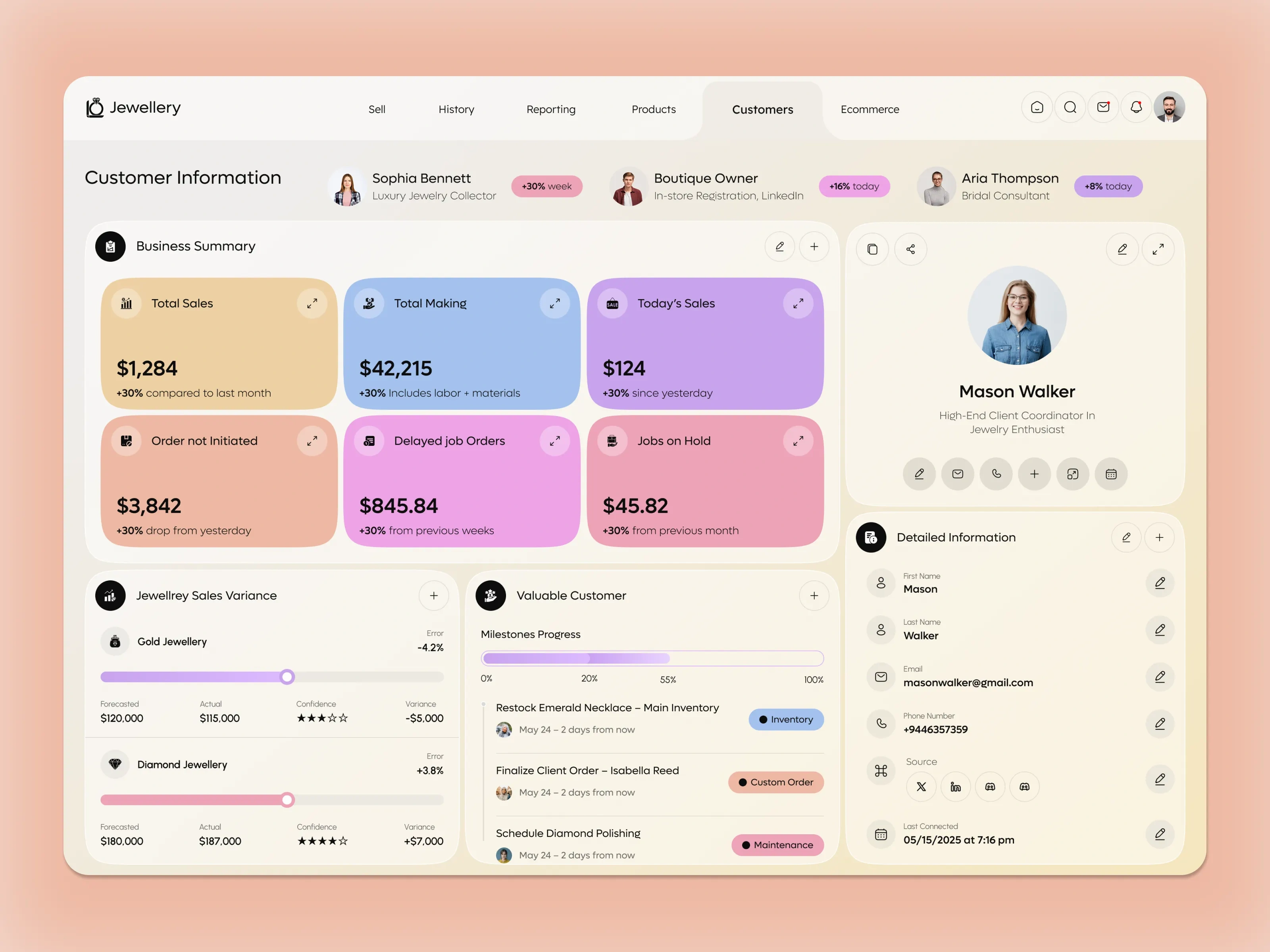
Manufacturing / Jewelry
Custom CRM · Workflow Automation · Client Portal
A single order route for jewelry production: automated assignment, CAD/estimate/invoice context, client portal and production integration.
Key capabilities
Business impact
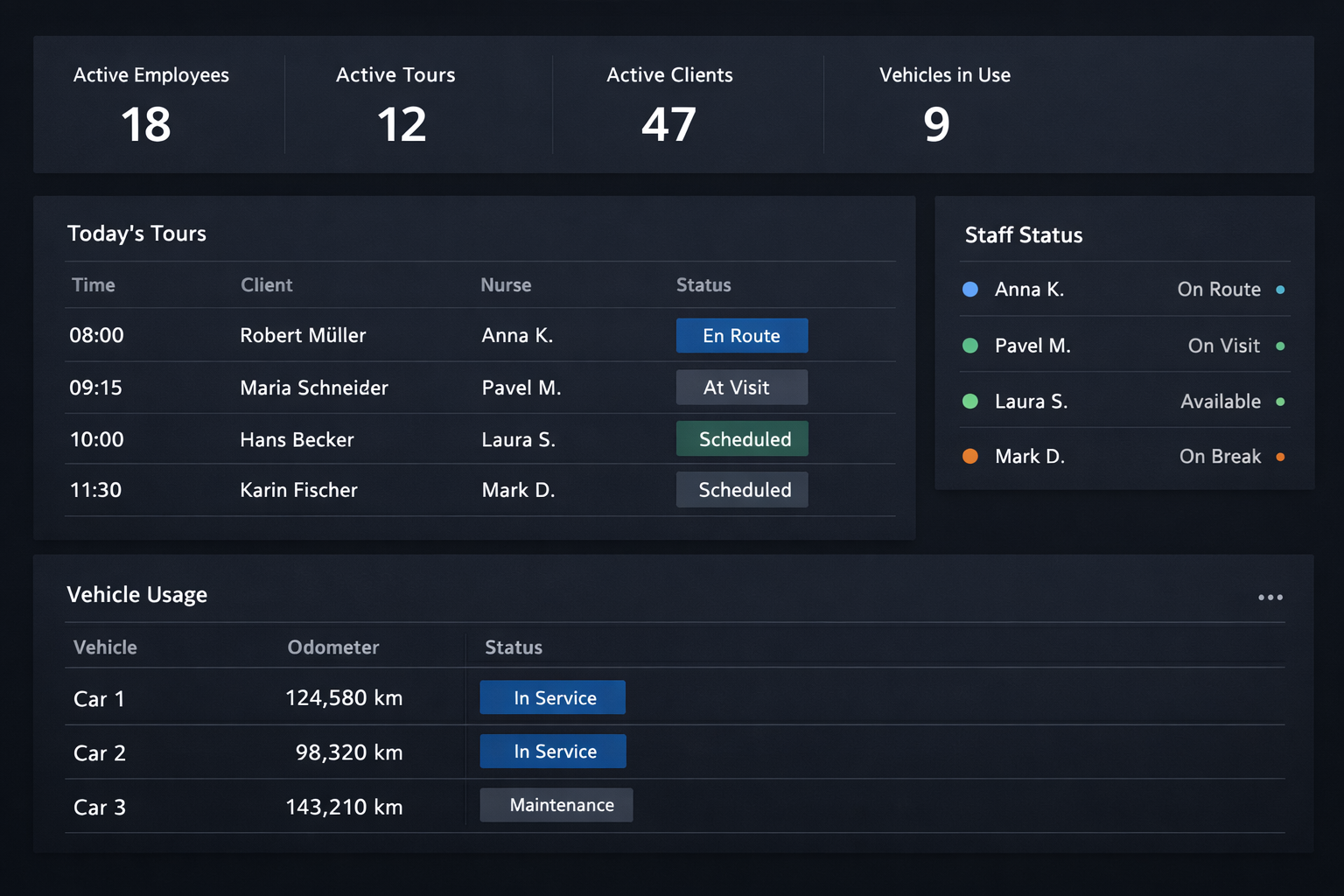
Healthcare / Ambulatory Care
Operations CRM · Tour Planning · Workforce App
A single system for daily care operations: staff, tours, time tracking, mobile task reports with client signatures, payouts, fleet and internal chat.
Key capabilities
Business impact

Hospitality / Restaurant
Online Ordering · Reservations · Admin System · Costing
One system for restaurant guest flow and daily operations: 3-language menu, Stripe orders, reservations, real-time chat, kitchen workflow, POS, staff and recipe costing.
Key capabilities
Business impact
We define the validation goal, target user journey, constraints and launch logic.
Before development starts, we lock the core flow, system boundaries and essential operations.
We implement the product, admin layer and measurement setup needed for the first release.
After launch, product signals drive the next iteration instead of assumptions.
Frontend
Astro / React / Vue / React Native landing shell when needed
Backend
Laravel / Node / auth / APIs / data models / admin logic
Infrastructure
Postgres / payments / analytics / notifications / deployment pipeline
A prototype demonstrates an idea. An MVP is an operating release with real users, product states and measurable outcomes.
Yes. That is exactly the point. We build the first version so the system can evolve without a total rewrite.
Yes. Most MVPs need internal workflows, support tooling and data control from the first release.
When the product idea is clear enough to define a core user flow, but still needs market validation before a full platform build.
We can define the real MVP scope, architecture and first release logic before development starts.
Request a System Audit